Get a recommendation
Tell us your requirements and our advisors will help you compare and shortlist the best-fit options, free and unbiased.
A real human, fast
Someone on our team replies within one business day, no bots, no ticket queue.
Routed to the right team
Buying, selling, partnering, or investing, you reach the people who can actually help.
Independent & unbiased
No pushy sales. Just honest guidance grounded in the ecosystem.
Tailored to your context
Tell us what you need and we shape the next steps around it.
Who are you? Pick the option that fits best.
Ranked by user rating × review volume. See all Project Management tools →
Average price: 97 products listed
97 Listings in Project Management Available
Avg rating
,
Price range
$0–$36000/mo
Free options
96 tools
New this quarter
74 added
What is Celoxis? Celoxis is project and portfolio management software offering project, portfolio and resource management software for mid-size companies. Celoxis helps mid-size companies and PMOs work more efficiently and achieve better outcomes. Key features of Celoxis Project planning Resource management Portfolio dashboards Time tracking Analytics and reporting Integrations with Microsoft Project, Jira, Salesforce and more Who uses Celoxis? Celoxis is built for mid-size companies and PMOs. It suits teams that want project planning without spreadsheets and disconnected tools. Why choose Celoxis? Compared with alternatives like Sciforma, Celoxis differentiates on project planning. Pricing is quote-based and scoped to your usage and team size.
Deployment
Compliance
Leantime is an open-source strategic project management system designed to make planning and task management simple and accessible, with built-in features that promote productivity, engagement, and cognitive accessibility for people with ADHD, dyslexia, and other cognitive differences. It aims to help non-technical teams plan strategically and execute, not just track tasks. The platform connects strategy to execution: goals and milestones, task and to-do management, idea boards, time tracking, documentation, and reporting, with a design mindful of how people with different cognitive styles work. Its focus on accessibility and strategic planning distinguishes it from purely task-focused tools, appealing to teams that want thoughtful, inclusive project management. Leantime uses a simple pricing model: a self-hosted, open-source Community Edition that is free, and a cloud-hosted Pro plan at 10 dollars per user per month (8 dollars billed annually) with the complete feature set, no upgrade tiers - including AI-powered task management, unlimited projects, goal and milestone tracking, time tracking, reporting, and 500 AI credits a month. Aimed at non-technical, small, and neurodivergent-friendly teams, it competes with Asana, Trello, Vikunja, GoodDay, and Freedcamp.
Deployment
Compliance
Zenkit is a flexible project and data management tool that lets teams organize work and information across multiple views - lists, Kanban boards, tables, calendars, mind maps, and Gantt - from the same underlying data. Part of a broader suite, it aims to be an adaptable workspace where teams manage projects, tasks, databases, and collaboration in the way that suits them. The platform treats data as flexible collections you can view and manipulate in different ways, similar to a hybrid of a project tool and a database, with custom fields, filters, and relationships. This makes it useful for classic project management as well as building custom workflows, CRMs, and trackers, while staying approachable for growing teams. Zenkit offers a free Personal plan for individuals and very small teams, a Plus plan at 9 dollars per user per month with custom fields, advanced filters, and priority support, a Business plan around 25 to 29 dollars per user per month with roles, permissions, advanced reporting, and dedicated support, and custom Enterprise. Its free tier is generous, though costs can rise with team size. Aimed at teams wanting a flexible, database-like workspace, it competes with monday.com, Airtable, Notion, ClickUp, and GoodDay.
Deployment
Compliance
Teamwork.com is a project management platform designed specifically for teams that do client work, agencies, consultancies, and professional-services firms. Unlike general task trackers, it combines project planning with the commercial side of delivery: billable time tracking, budgets, invoicing, and profitability live in the same workspace, so teams can see not just whether a project is on schedule but whether it is making money. The core is flexible project execution. Teams organize work with task lists, subtasks, dependencies, milestones, and multiple views including board (Kanban), Gantt, table, and calendar. Built-in time tracking captures billable and non-billable hours against tasks, workload and resource management balance capacity across people, and client access lets external stakeholders collaborate without seeing internal details. Proofing, forms, notebooks, and messages keep communication and approvals inside the project rather than scattered across email. Teamwork.com integrates with tools like Slack, HubSpot, QuickBooks, and Google Workspace, and connects to companion products for CRM, chat, and help desk. Pricing spans a free tier and paid Deliver, Grow, and Scale plans priced per user, with higher tiers unlocking resource scheduling, retainer management, and profitability reporting. It suits teams that want one system to plan work, track time, manage resources, and bill clients, and it competes with Asana, monday.com, ClickUp, and Wrike, differentiating on its client-services and billing focus.
Capabilities
Deployment
Fieldwire (by Hilti) is a construction field management platform that helps project teams coordinate work on the jobsite through plan viewing, task management, punch lists, specifications, and file sharing, connecting the field and the office in real time. It is used by contractors, subcontractors, and project teams to manage construction work efficiently. The platform provides plan and drawing viewing with markup, task and punch-list management, specifications, checklists, file and photo sharing, and reporting, accessible on mobile in the field and on the web in the office. Its focus on jobsite coordination - keeping everyone working from the latest plans and tasks - makes it a practical tool for managing construction execution. Fieldwire offers a free Basic plan (plan viewing, task management, specs, checklists; limited to 5 users, 3 projects, 100 sheets), with paid plans per user per month: Pro at 54 dollars, Business at 74 dollars, and Business Plus at 94 dollars, plus custom contracts for larger organizations with unlimited users, SSO, and API access. Aimed at construction teams, it competes with Procore, Buildertrend, PlanRadar, Raken, and Autodesk Construction Cloud.
Deployment
Compliance
Traqq is a time tracking and productivity monitoring tool designed for remote and distributed teams, with a focus on ethical, privacy-respecting tracking. It records work hours, tracks projects and expenses, and provides productivity insights while blurring screenshots and avoiding invasive surveillance, aiming to build trust rather than monitor employees oppressively. The platform offers automatic time tracking, project and client management, work-related expense tracking, break tracking, and activity monitoring with privacy safeguards. It supports timesheets, reports, and billing, making it useful for agencies, remote teams, and businesses that need accurate time data and productivity visibility without heavy-handed monitoring. Traqq offers a free plan for teams of up to three seats, a Plus plan starting around 4 dollars per user per month, and a Premium Teams plan around 6 dollars per user per month for teams of 4 to 100 seats, with custom quotes above 100 seats. Its combination of low pricing, a free tier, and privacy-focused tracking appeals to teams that want time data without invasive surveillance. Aimed at remote teams and agencies, it competes with Toggl Track, Hubstaff, Clockify, TimeCamp, and Everhour.
Deployment
Compliance
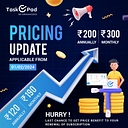
What is TaskOPad? TaskOPad is a task management and tracking platform for teams and professionals in India. It covers project management, task delegation, workflow automation, chat discussions, timesheets, attendance with geo and face check-in, leave management, reports and document management in one application. Key features of TaskOPad Project and task tracking Workflow management Task delegation with ownership Chat discussions Timesheets Geo and face check-in attendance Leave management Reports and document management Who uses TaskOPad? TaskOPad is used by businesses and teams across industries such as manufacturing, education, real estate, law, IT and healthcare. The vendor says it is trusted by more than 10,000 companies, and it suits teams that want task tracking combined with attendance and leave tools in one place. TaskOPad pricing TaskOPad does not show specific prices on its homepage, which refers visitors to a pricing plans page. A 15-day free trial and a free demo are offered, but plan costs are not confirmed here, so check taskopad.com. TaskOPad alternatives Alternatives to TaskOPad include Asana, Zoho Projects and Trello. Compare attendance and leave features, mobile apps, WhatsApp support, workflow automation and per-user pricing.
Capabilities
Deployment
Notion is an all-in-one connected workspace that blends documents, wikis, databases, and project management into a single flexible tool. Instead of juggling a separate doc editor, knowledge base, task tracker, and spreadsheet, teams build their own system from modular "blocks", pages, tables, boards, calendars, and views that link to each other. Its core strength is flexibility: the same underlying database can be shown as a kanban board, a calendar, a timeline, or a gallery, so product teams run roadmaps, marketing teams plan content, and companies run internal wikis in one place. Notion AI is now built into paid plans, offering writing help, summaries, Q&A across your workspace, and, more recently, custom AI agents that can take multi-step actions on your content. Notion suits everyone from solo note-takers to large companies standardizing their knowledge and workflows. It is popular with startups and product teams for consolidating tools, though very large or highly structured deployments sometimes hit performance and permissioning limits that dedicated tools handle better.
Capabilities
Deployment
Memtime is automatic time tracking software that captures your computer activity locally on your device, then lets you turn that timeline into accurate time entries, serving privacy-conscious professionals in billable-hours industries. Rather than manual timers, it records what you worked on across apps and documents, so you can reconstruct your day precisely without forgetting billable time. The platform runs quietly in the background, building a minute-by-minute timeline of your activity - documents, apps, browser tabs, emails, meetings - stored locally for privacy. You then drag that captured time into projects and tasks, and Memtime integrates with project management and billing tools so tracked time flows into invoicing and reporting. Memtime uses tiers structured around integration depth and enterprise controls rather than user limits, with all tiers including the core automatic tracking engine, unlimited time entries, and unlimited devices per user. Pricing starts around 12 dollars per user per month (billed every two years) and scales to around 29 dollars per user per month for annual Premium billing, with no free plan and no monthly option, but a 30-day free trial. Aimed at lawyers, consultants, agencies, and billable professionals, it competes with Toggl Track, Timely, TimeCamp, Everhour, and RescueTime.
Capabilities
Deployment
Compliance
What is Workamajig? Workamajig is agency project management software offering agency software for projects, resources, finance and CRM in one system. Founded in 1995 and based in Pleasanton, California, USA, Workamajig helps creative and marketing agencies work more efficiently and achieve better outcomes. Key features of Workamajig Project and resource management Agency accounting CRM Creative workflows Analytics and reporting Integrations with QuickBooks, Xero, Salesforce and more Who uses Workamajig? Workamajig is built for creative and marketing agencies. It suits teams that want project and resource management without spreadsheets and disconnected tools. Why choose Workamajig? Compared with alternatives like Function Point, Workamajig differentiates on project and resource management. Pricing is quote-based and scoped to your usage and team size.
Deployment
Compliance
Things, by Cultured Code, is a personal task manager for Apple devices celebrated for its elegant design and thoughtful structure. It is built around a clear organizational model, Areas, Projects, and to-dos, with Today and Upcoming views, that maps naturally onto productivity methods like Getting Things Done (GTD), helping individuals capture, organize, and actually complete their tasks in a calm, focused interface. Its polish and attention to detail have won it Apple Design Awards and a devoted following. Unlike most modern apps, Things uses a one-time purchase model rather than a subscription: you buy the app once per platform (Mac, iPhone/Apple Watch, iPad, Vision Pro), and syncing across your devices via Things Cloud is free. It supports quick entry, natural-language dates, tags, checklists, deadlines, reminders, and a calendar view, and integrates with Apple's ecosystem (Reminders import, Siri, Calendar). It is deliberately focused on personal productivity, not team collaboration, which keeps it simple and fast. Things suits individuals in the Apple ecosystem who want a beautiful, focused, GTD-friendly task manager and prefer a one-time purchase over a subscription. Pricing is a separate one-time purchase per platform (Mac, iPhone, iPad, Vision Pro), with free cross-device sync via Things Cloud.
Capabilities
Deployment
Compliance
What is Kitsu? Kitsu is production tracking software offering production management software for animation and VFX studios. Based in France, Kitsu helps animation studios work more efficiently and achieve better outcomes. Key features of Kitsu Production tracking Review Breakdowns Open source Analytics and reporting Integrations with Adobe Premiere Pro, DaVinci Resolve, Avid Media Composer and more Who uses Kitsu? Kitsu is built for animation studios. It suits teams that want production tracking without spreadsheets and disconnected tools. Why choose Kitsu? Compared with alternatives like ftrack, Kitsu differentiates on production tracking. Pricing is quote-based and scoped to your usage and team size.
Deployment
Compliance
Saaskart Market Grid™
Explore how leading Project Management solutions compare based on customer satisfaction, market presence, adoption, and buyer feedback. The Market Grid helps you identify category leaders, high-performing solutions, and emerging products within the Project Management ecosystem.
Category Leader
Things
#1 in Project Management
Best Value Project Management
TickTick
From $3/mo
Trending
Things
Most viewed
Market Insights
Derived from live Saaskart marketplace data, engagement, reviews, and pricing for this category.
Live Rankings
Project management software helps teams plan, organize, execute, and track projects, managing tasks, timelines, resources, and collaboration in one place so work gets delivered on time and on budget. This guide explains what project management software is, how it works, the features that matter, and how to choose the right platform.
Project management software helps teams plan, organize, execute, and track projects, managing tasks, timelines, resources, and collaboration in one place so work gets delivered on time and on budget. This guide explains what project management software is, how it works, the features that matter, and how to choose the right platform.
Project management software is a platform for planning and coordinating the work required to deliver a project. It organizes tasks, dependencies, timelines, resources, and communication, giving teams a shared view of what needs doing, who's responsible, and whether the project is on track.
Tech stacks
See where project management fits in a complete stack, with the other software, AI agents and services each business needs.
The purpose is to bring structure and visibility to complex, multi-step, multi-person work. Instead of tracking projects in scattered spreadsheets, emails, and chat, the software centralizes plans and progress so everyone stays aligned and managers can spot risks early.
The category spans simple task and list tools, visual boards and timelines, and enterprise portfolio management suites. Teams across every industry use project management software to deliver everything from marketing campaigns and product launches to construction and software development predictably and efficiently.
A project is broken into tasks with owners, due dates, and dependencies, organized into a plan visualized as a list, board, calendar, or Gantt timeline. Team members update task status as they work, and the software rolls progress up into dashboards and reports for managers and stakeholders.
Core components include task management, multiple project views (list, Kanban, Gantt, calendar), scheduling and dependencies, collaboration (comments, files, mentions), resource and workload management, and reporting. Integrations connect the tool to communication, file storage, and other work systems.
For example, a marketing team planning a campaign creates tasks for each deliverable, sets dependencies and deadlines, assigns owners, and tracks progress on a board and timeline. Members comment and attach files on tasks, the manager monitors workload and a dashboard of milestones, and stakeholders see status without status meetings.
Creating, assigning, and tracking tasks with owners, due dates, priorities, and subtasks. Tasks are the atomic unit of project work, and clear task management ensures everyone knows what to do and nothing falls through the cracks.
List, Kanban board, calendar, and Gantt timeline views of the same work. Different views suit different work styles and needs, boards for flow, Gantts for dependencies, so flexible visualization helps every team member work the way they think.
Timelines, milestones, and task dependencies that model how work sequences. Managing dependencies and schedules is what keeps complex projects on track and reveals how delays in one task ripple through the plan.
Comments, mentions, file attachments, and activity feeds on tasks and projects. Centralizing communication in the context of the work reduces scattered email and chat and keeps decisions and files where the team can find them.
Views of who's working on what and how loaded they are, to balance assignments. Workload management prevents burnout and bottlenecks and helps managers allocate people effectively across projects.
Real-time dashboards on progress, milestones, and risks for teams and stakeholders. Reporting gives visibility into project health, surfaces problems early, and replaces status meetings with always-current information.
Clear plans, deadlines, and dependency tracking keep work on schedule and surface delays before they derail the project.
Everyone sees the plan, their responsibilities, and overall progress, reducing miscommunication and keeping the team aligned.
Centralizing tasks, files, and discussion in context cuts scattered email and chat and keeps work moving.
Workload visibility helps balance assignments, prevent burnout, and allocate people where they're needed most.
Live dashboards give stakeholders current status on demand, replacing time-consuming update meetings with self-service visibility.
| Type | Best for | Ideal size | Pros | Limitations |
|---|---|---|---|---|
| Simple task & list tools | Lightweight task tracking for small teams | SMB | Easy, fast to adopt, affordable | Limited for complex projects and dependencies |
| Visual work management | Flexible boards, timelines, and team work | SMB to enterprise | Versatile views and collaboration | Can sprawl without governance |
| Traditional / Gantt-based PM | Structured projects with dependencies and milestones | Mid-market to enterprise | Strong scheduling and critical-path planning | Heavier and less agile |
| Enterprise portfolio management (PPM) | Managing many projects, resources, and budgets | Enterprise | Portfolio visibility and governance | Complex and costly to implement |
SaaS & Technology: Tech companies use project management software to scale go-to-market motions, align teams, and operate efficiently as they grow.
Manufacturing: Manufacturers apply project management software to manage complex, multi-stakeholder processes across long cycles and distributed operations.
Healthcare: Healthcare and life-sciences organizations use project management software where accuracy, security, and compliance are non-negotiable.
Retail: Retailers use project management software to manage high volumes, personalize engagement, and react quickly to demand.
Financial Services: Banks, insurers, and fintechs rely on project management software for control, auditability, and regulatory compliance.
Education: Institutions and edtech firms use project management software to manage stakeholders and scale programs efficiently.
Real Estate: Real-estate and property teams use project management software to manage long cycles and high-value relationships.
Professional Services: Agencies and consultancies use project management software to deliver client work profitably and forecast accurately.
E-commerce: Online retailers use project management software to unify data across channels and grow customer lifetime value.
Choose a tool that fits how your teams work, agile boards, traditional Gantt planning, or flexible work management, and the complexity of your projects.
Confirm it offers the views your teams need (list, board, calendar, Gantt) and adapts to different work styles.
Evaluate how well it centralizes discussion, files, and updates so the tool reduces rather than adds to communication overhead.
If you juggle people across projects, assess workload and capacity views to balance assignments effectively.
Check connections to your chat, file storage, calendar, and other work tools so the PM tool fits your existing stack.
Ensure the platform scales across teams with the permissions, templates, and governance larger organizations need.
Favor a tool teams will actually adopt, since the best plan is worthless if people don't keep it updated.
Verify dashboards and reports give the visibility managers and stakeholders need into progress and risk.
AI assists planning by drafting project plans, breaking goals into tasks, and estimating timelines from a brief description.
Predictive features flag at-risk tasks and projects, forecast delays from current progress, and suggest reallocations to keep work on track.
AI automates routine project work, status summaries, updates, and reminders, freeing managers from administrative overhead.
Expect AI to surface insights across portfolios and recommend priorities; prioritize tools with strong data and adoption, since AI guidance depends on teams keeping the underlying work current.
Project management software is a platform for planning, organizing, executing, and tracking projects in one place. It manages tasks, timelines, dependencies, resources, and collaboration, giving teams a shared view of what needs doing, who's responsible, and whether the project is on track. The purpose is to bring structure and visibility to complex, multi-step, multi-person work, replacing scattered spreadsheets, emails, and chat with a centralized system. Teams visualize work as lists, boards, calendars, or Gantt timelines, update progress as they go, and roll it up into dashboards for managers and stakeholders. The category spans simple task tools to enterprise portfolio suites, and teams across every industry use it to deliver projects predictably, on time, and on budget while reducing miscommunication and status meetings.
Task management focuses on tracking individual to-dos, creating, assigning, and completing discrete tasks, and suits personal productivity or simple team coordination. Project management is broader, organizing many tasks into a structured project with timelines, dependencies, milestones, resources, and reporting toward a defined goal and deadline. Every project contains tasks, but project management adds the planning, sequencing, and oversight needed to deliver complex work involving multiple people and stages. In practice, simple needs are met by task management tools, while coordinating a campaign, product launch, or construction project requires project management capabilities like dependency tracking and resource management. Many platforms span both, letting small teams start with tasks and scale into full project management as their work grows in complexity and coordination needs.
Project management tools offer multiple views of the same work to suit different needs. A list view shows tasks in a structured, sortable format good for detail and quick updates. A Kanban board displays tasks as cards in columns by status, ideal for visualizing workflow and managing flow. A calendar view places tasks and deadlines on dates for time-based planning. A Gantt chart shows tasks on a timeline with dependencies and is best for scheduling complex projects and seeing the critical path. Some tools add workload, dashboard, and timeline views. The value of multiple views is that different team members and project types favor different perspectives, a developer might prefer a board while a manager needs a Gantt, so flexible visualization lets everyone work the way that suits them while sharing one underlying plan.
Traditional (waterfall) project management plans a project upfront in sequential phases with defined scope, timeline, and dependencies, often visualized in Gantt charts; it suits projects with clear, stable requirements like construction or events. Agile project management works in short iterations, embracing changing requirements and delivering incrementally, typically visualized on Kanban boards or in sprints; it suits software development and other work where requirements evolve. The methodologies imply different tooling: traditional favors scheduling and critical-path features, while agile favors boards, backlogs, and sprint management. Many modern tools support both or a hybrid, letting teams choose per project. When selecting software, match it to how your teams actually work, since forcing an agile team into rigid waterfall planning, or vice versa, creates friction, workarounds, and poor adoption.
Project management software improves collaboration by centralizing work, communication, and files in one shared space. Instead of discussions scattered across email and chat and files lost in inboxes, comments, mentions, and attachments live on the relevant task, so context stays with the work and anyone can catch up. Everyone sees the plan, their responsibilities, and overall progress, which reduces miscommunication and the need for status meetings. Activity feeds and notifications keep the team aware of changes, and shared dashboards give stakeholders visibility on demand. Integrations with chat and file tools further connect the workflow. The result is alignment: people know what's happening, what they own, and how their work fits the bigger picture, which is especially valuable for distributed and cross-functional teams where informal coordination breaks down.
Resource and workload management is the capability to see and balance how people's time and effort are allocated across tasks and projects. It shows who's working on what, how loaded each person is, and where capacity exists, helping managers assign work realistically, prevent overload and burnout, and avoid bottlenecks. In organizations running many concurrent projects, this is essential for deciding which projects can be staffed and when, and for spotting when someone is over-committed before deadlines slip. Features range from simple workload views to detailed capacity planning with hours and availability. For teams juggling people across multiple projects, strong resource management is a key differentiator; for small teams on a single project, it matters less. When evaluating tools, weigh resource management against how much you need to coordinate shared people across competing priorities.
Adoption is the make-or-break factor, because a plan that isn't kept current loses all its value. To drive it, choose a tool that's genuinely easy to use and matches how your teams work, since friction kills adoption. Start simple rather than configuring excessive fields and processes that overwhelm people, and add complexity only as needed. Involve the team in setup, provide training, and have leaders use the tool and reference it instead of asking for updates by email or in meetings, which reinforces that the tool is the source of truth. Integrate it with the chat and file tools people already use so it fits their workflow. Celebrate the visibility and reduced status meetings it delivers. Ultimately, adoption comes when the tool clearly makes work easier rather than adding overhead.
Project management software is typically priced per user per month, with tiers that unlock more views, automation, integrations, reporting, and administration. Many tools offer free plans for small teams or limited features, mid-range plans for growing teams, and enterprise tiers with advanced security, resource management, and portfolio capabilities at higher per-user rates. Total cost scales with your team size and the tier you need, and enterprise deployments may add implementation and training costs. When budgeting, count all users who need access, identify which features you genuinely require, and avoid paying for enterprise capabilities a small team won't use. Because per-user pricing adds up across large organizations, model the cost at your full headcount. The best value comes from the lowest tier that meets your real needs rather than the most feature-rich plan.
Yes, integration is important, and most platforms connect with the broader work stack. Common integrations include chat tools like Slack and Teams for notifications and updates, file storage like Google Drive and SharePoint for attachments, calendars for deadlines, and development tools like GitHub or Jira for engineering teams. Many also offer time tracking, reporting, and automation connectors plus APIs and platforms like Zapier for custom workflows. These integrations let the project management tool fit into existing workflows rather than becoming an isolated silo that requires duplicate updates. When evaluating software, confirm it connects to the specific tools your teams rely on, since a PM tool disconnected from where people communicate and store files creates friction and undermines adoption. Good integration is what makes the tool a hub rather than just another place to update status.
AI enhances project management across planning, execution, and oversight. In planning, it can draft project plans, break goals into tasks, and estimate timelines from a brief description, giving managers a head start. During execution, predictive features flag at-risk tasks and projects, forecast delays based on current progress, and suggest reallocating work to stay on track. AI also automates routine overhead like status summaries, updates, and reminders, freeing managers from administrative work. Across portfolios, it can surface insights and recommend priorities. These capabilities depend on teams keeping the underlying work current, since AI guidance is only as good as the data it analyzes, another reason adoption matters. When evaluating AI features, look for practical help with planning, risk detection, and automation rather than novelty, and favor tools where AI reduces busywork and improves foresight.
Project management software is used by teams across virtually every industry and function. Marketing teams manage campaigns and content calendars; product and engineering teams run development sprints and roadmaps; operations teams coordinate processes and initiatives; agencies and professional services deliver client projects; construction and manufacturing manage builds and production; and IT teams handle implementations. Within organizations, project managers plan and oversee, team members execute and update tasks, and leaders and stakeholders monitor progress through dashboards. It serves teams of all sizes, from a few people coordinating tasks to enterprises managing portfolios of hundreds of projects. The common need is delivering multi-step, multi-person work predictably. Because the category spans simple to sophisticated tools, organizations choose based on project complexity, methodology, and how many concurrent projects and shared resources they must coordinate.
Start by matching the tool to how your teams work, agile boards, traditional Gantt planning, or flexible work management, and to the complexity of your projects, since methodology fit prevents friction. Confirm it offers the views your teams prefer and handles dependencies and scheduling if your projects need them. Evaluate collaboration features so the tool reduces rather than adds communication overhead, and assess resource management if you coordinate people across projects. Check integrations with your chat, storage, and calendar tools, and ensure it scales with the permissions and governance you need. Above all, prioritize ease of use and adoption, because the best-featured tool fails if teams won't keep it updated. Trial shortlisted tools with a real project and a real team, and choose the simplest one that genuinely meets your needs rather than the most feature-rich.